How to Support an Appeal of a Mental Health Medical Necessity Denial

A therapist’s recommendation does not prevent an insurer from denying mental health care as not medically necessary. Appealing a medical necessity denial for mental health treatment means answering the insurer’s stated reason with clinical records that explain why the care is appropriate and needed.
A denial can be hard to reconcile with the treatment plan you and your clinician agreed on. Use the appeal to make the clinical reasoning clear: connect symptoms, functional limitations, treatment history, and the requested care to the insurer’s specific reason for denying coverage.
This article explains common reasons for medical-necessity denials and how to build a focused appeal with a treatment chronology, supporting documentation, and a clear clinical rationale. It also covers internal appeals and external review. According to the Centers for Medicare & Medicaid Services, most external reviews are completed within 45 days under the federal and state guidelines described for that process.
Key Takeaways
- Match the appeal to the insurer’s stated denial reason instead of relying on a general objection.
- Build a clear treatment chronology that connects symptoms, functional limitations, and the care being requested.
- Strengthen the clinical rationale with relevant treatment history, progress notes, and evidence explaining why the proposed approach fits the patient’s needs.
- Use the denial notice to identify appeal instructions and deadlines, then organize supporting records before submitting.
- A Free Billing Audit from Lumiere Billing can help behavioral health practices spot billing and denial-process issues that may need closer attention.
What is an Independent Medical Review for a mental health denial in California?
An Independent Medical Review (IMR) is an external assessment of an insurance denial. When appealing medical necessity denials mental health, review the plan’s appeal route and denial documents thoroughly before choosing your next step.
-
Review the Denial Notice and Benefits Explanation
Compare the denial notice with the explanation of benefits (EOB) for the same service. Record the treatment denied, service date, stated reason, and any authorization decision. Check for the internal appeal process, submission address, and deadline. Keep the notice and EOB together, as they may describe the same decision differently.
Match the denial’s wording to the record. For example, if the notice says clinical necessity was not established, identify which clinical information the insurer says is missing. If the notice cites authorization, address that separately from medical necessity. This keeps the appeal focused.
Keep every page, including attachments and appeal instructions. Note when you received the decision and the plan’s claim reference number. These details help identify the case if the insurer or review organization requests clarification.
-
Seek an External Independent Review
If an internal appeal is denied, ask whether the health plan allows external review. The Centers for Medicare & Medicaid Services says members may have the right to request review by an independent third party. State departments of insurance and consumer assistance programs provide information about Independent Medical Review, or IMR, for eligible disputes.
Prepare the denial, EOB, appeal decision, and relevant clinical records as one organized submission. An external organization assesses the dispute independently, rather than simply repeating the plan’s internal review. Under the federal and state external review guidelines described by the Centers for Medicare & Medicaid Services, most external reviews are completed within 45 days.
For urgent external reviews, the Centers for Medicare & Medicaid Services says decisions may be completed within 72 hours under the described federal and state guidelines. Keep the submission focused on the disputed service and supporting clinical facts. Follow the instructions for the applicable review route.
-
Identify the Plan’s Appeal Route
Determine whether the health plan is regulated by your state’s department of insurance or operates as a self-funded employer plan. State insurance departments handle consumer complaints and provide plan-specific guidance. Employer-plan participants can raise parity enforcement concerns with the U.S. Department of Labor. Medicare and Medicaid plans have separate appeal processes, so follow the instructions for the specific plan.
For help with a coverage complaint, contact your state insurance division. For a self-insured employer plan, the U.S. Department of Labor’s parity contact is 1-866-444-3272. People concerned about mental health parity in a U.S. plan can call the federal contact listed for that issue, 1-877-267-2323, extension 6-1565.
For free legal aid or patient advocacy, start with your state insurance division or employer-plan contact. These agencies can explain complaint channels. Ask the treating provider to help organize clinical records, while keeping the appeal deadline and submission instructions in view.
Why was my mental health treatment denied by insurance?
Insurers deny mental health claims for clinical and administrative reasons. Identify the specific reason first, then decide whether the available evidence can address it.
-
Identify the Denial Reason
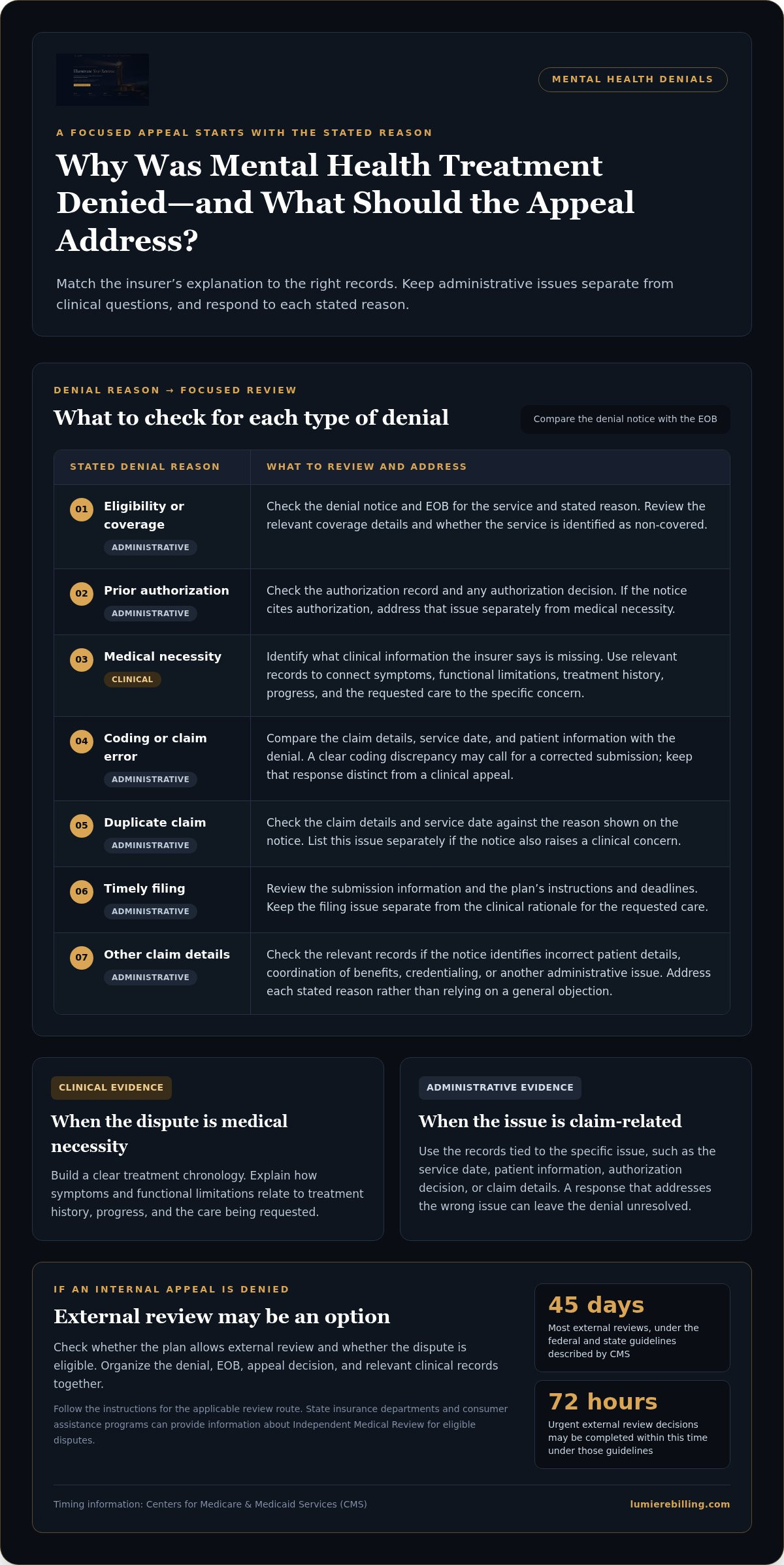
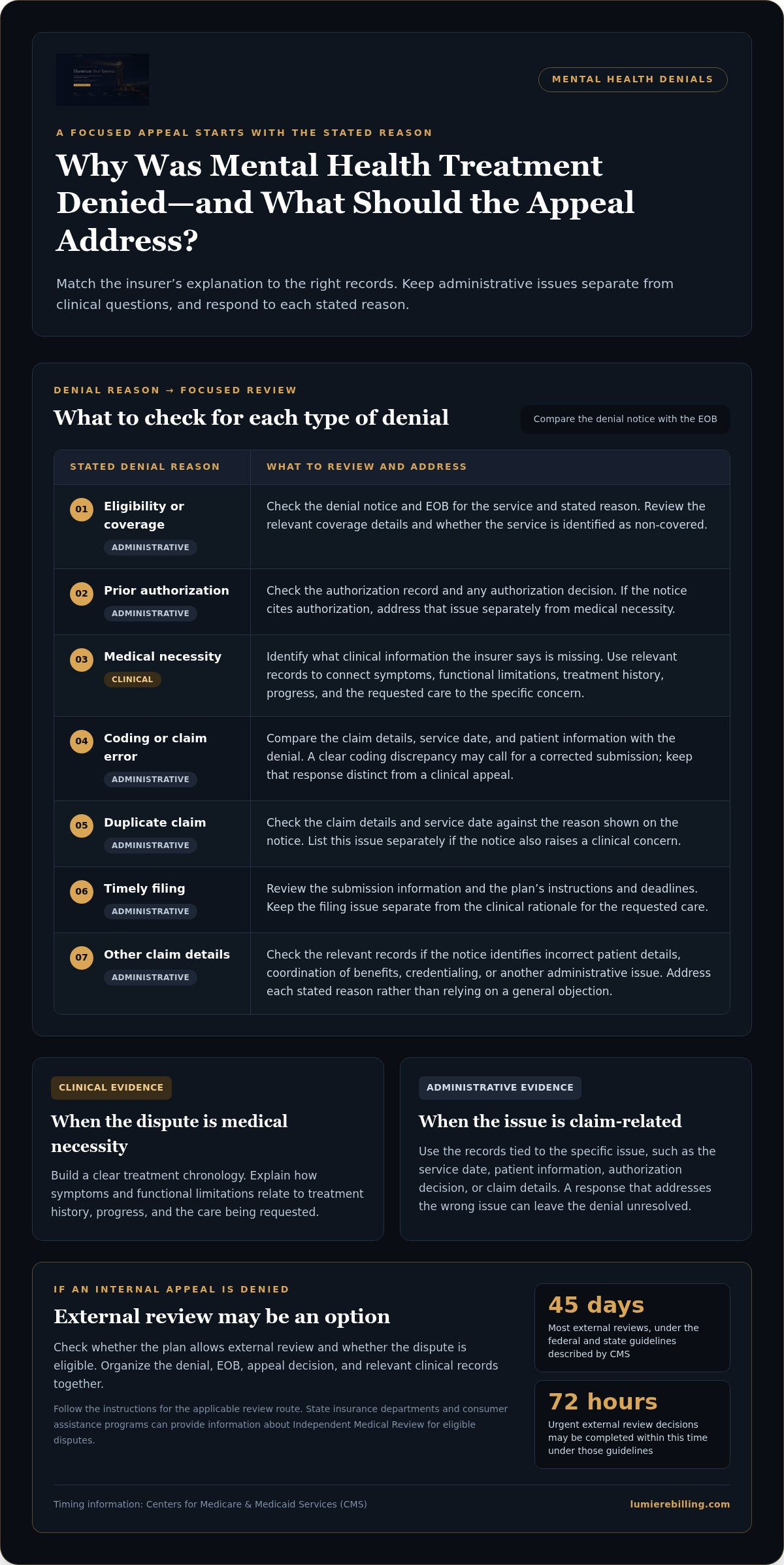
Sort the denial by its stated reason, not just by the service. Common issues include eligibility or coverage problems, missing or invalid prior authorization, insufficient medical necessity documentation, coding errors, duplicate claims, and timely filing issues. Incorrect patient details, coordination of benefits, credentialing, or non-covered services can also affect payment.
Use the denial notice to identify the issue affecting the claim. For example, a therapy session might be denied because authorization was missing, rather than because the insurer rejected the clinical need. Compare the stated reason with the service date, patient information, authorization record, and claim details.
Keep clinical and administrative issues separate. If the notice questions medical necessity, identify whether it cites the diagnosis, treatment rationale, progress evidence, or requested service. If it identifies an administrative gap, focus on the related claim or authorization record. Responding to the wrong issue can leave the denial unresolved.
Look for multiple reasons. A notice may identify a coding problem and separately question the clinical record. List each reason and match it to the relevant supporting information. This helps the patient and provider decide whether to correct the claim, appeal, or address both issues.
-
Weigh the Costs and Benefits of Appealing
Assess whether the denial can be corrected and what an appeal could change. A clear authorization or coding discrepancy may call for a corrected submission. A medical necessity dispute requires clinical evidence that directly addresses the insurer’s concern. Choose a response that fits the stated reason.
Consider the importance of the denied care, the strength of the available documentation, and the time needed to prepare a response. Continued access to prescribed treatment may matter to the patient. For a practice, repeated denials can signal a workflow issue worth reviewing.
Reduce avoidable denials by verifying patient coverage at every session, tracking authorization requirements, and reviewing claim details before submission. If denials recur, compare them by payer, service, or documentation gap. A pattern may point to a preventable administrative problem rather than an isolated claim issue.
Behavioral health practices can use Revenue Cycle Management support to examine claim handling and denial patterns. Consider this support when recurring administrative work disrupts appeal preparation or timely follow-up.
Medical necessity documentation
Build the record around the insurer’s specific clinical concern. A clear chronology and focused appeal letter connect treatment needs with the requested care.
-
Check the Insurer’s Medical Necessity Criteria
Identify the criteria the insurer used to review the mental health service. Insurers assess whether recommended care is reasonable, necessary, and appropriate. Utilization review may also consider efficiency and consistency with accepted medical practice.
Ask for the specific guideline or plan language behind the decision. Compare each criterion with the patient’s diagnosis, symptoms, functional limitations, and treatment plan. If the insurer identifies missing information, address that element directly. A diagnosis or general statement that therapy is needed is not enough on its own.
Use the plan’s own terms to organize the response. For example, link documented symptoms to the requested treatment by explaining the clinical purpose of each service.
-
Document Treatment History and Chronology
Arrange the patient’s care chronologically, from the initial assessment through the denied treatment. Include the diagnosis, symptoms, interventions, response, and any changes to the plan. Explain gaps or changes in care with their clinical context, rather than leaving breaks unexplained.
Show how the current request follows from earlier treatment. For example, describe whether symptoms persisted, improved, or worsened after a treatment change. If the denial concerns frequency, document what happened when sessions were less frequent. A chronology helps reviewers see the clinical pattern, not just isolated visits.
Keep dates, service descriptions, and progress notes consistent. Correct documentation errors before submission, especially conflicting dates or descriptions of the same therapy session.
-
Gather Clinical Documentation
Select records that support the exact service under review. Include relevant assessments, progress notes, treatment plans, and the clinician’s explanation of medical necessity. The documentation should show symptoms, functional effects, treatment goals, and evidence of progress or ongoing need.
Explain why skilled therapy is appropriate and how the proposed approach addresses the patient’s needs. Avoid unrelated records that obscure the central clinical evidence. If prior authorization is part of the dispute, include the relevant authorization details and connect them to the service dates.
Check every record for completeness before attaching it. A missing progress note or unclear treatment rationale can leave the reviewer without important context.
-
Prepare the Appeal Letter and Supporting Records
Write a concise letter that answers the insurer’s specific reason for denial. Identify the service denied and explain how the clinical record supports it. Refer to attached records by name and date so the reviewer can find each piece of evidence quickly.
Link the letter’s statements to the chronology and clinical documentation. If the insurer questions ongoing therapy, for example, cite notes documenting symptoms, functional limitations, and treatment response. Avoid broad claims that the attachments do not support.
Before sending, compare the letter and records with the appeal instructions. Check patient and claim details, include relevant authorization materials, and keep a complete copy of the submission.
Clinical evidence and treatment rationale for appeals
A doctor or therapist can support an appeal with a focused clinical letter, relevant records, and evidence explaining why the requested treatment fits the patient’s needs.
-
Build the Clinical Treatment Rationale
Connect the requested care to the patient’s diagnosis, symptoms, and functional limitations. Explain why the treatment approach is appropriate, which clinical goals it addresses, and how the clinician will assess progress. Make each point answer the insurer’s specific concern.
For a frequency denial, describe what may happen if sessions become less frequent. If the patient’s condition worsened during a previous reduction, explain that pattern and its clinical effect. Avoid broad claims about possible harm; describe the likely impact on this patient’s health and daily functioning.
A doctor or therapist should clarify the clinical decision, not simply restate the treatment plan. Behavioral health evidence is strongest when it links the patient’s presentation, the proposed intervention, and the reason care should continue.
-
Gather Letters and Clinical Evidence
Ask the treating clinician to prepare a letter of medical necessity identifying the diagnosis, symptoms, functional limitations, and recommended treatment. The letter should explain why the approach is appropriate and directly address the denial’s rationale. Attach supporting records, such as relevant assessments and progress notes.
For denied treatment frequency, include clinical details showing how the patient responded to different levels of care. For a medication denial, summarize prescribing history, why the clinician considers the medication necessary, and the patient concerns or preferences that informed the decision. Keep the records relevant to the requested service.
Arrange the letter and attachments so an external reviewer can connect each clinical statement to supporting evidence. Remove unrelated records that could distract from the central rationale.
-
Use Clinical Literature to Support the Appeal
Select clinical literature that addresses the patient’s treatment approach or the disputed care. APA Practice Guidelines may support an appeal when they explain why the recommended intervention fits the clinical circumstances. Cite the relevant guidance and connect it to the patient’s documented symptoms and treatment response.
Literature can strengthen the reasoning, but it does not replace individualized evidence. Explain how the cited recommendation applies to this patient and identify important differences. A general article about a diagnosis may carry little weight if it does not address the treatment decision under review.
Before submission, check that the clinical letter, records, and cited guidance tell one consistent story. Practices that need to examine recurring appeal-process gaps can explore behavioral health practice guidance as part of that review.
Appealing a denial based on medical necessity
A strong appeal answers the insurer’s clinical rationale with focused evidence. Follow these steps to move from the denial notice to a complete submission.
- Match the denial reason to the health plan’s criteria. Note whether the insurer disputes the diagnosis, treatment intensity, progress, or appropriateness of the service. Request the criteria and plan guidelines used for the decision if they are not included. This gives the provider a specific standard to address rather than a general objection.
Separate medical necessity from administrative issues such as authorization or coding. If the notice cites both, identify each issue and respond to each independently. A clinical explanation will not correct missing authorization, and a corrected claim will not resolve a clinical dispute.
- Ask the treating provider to prepare a direct clinical response. The appeal should explain the patient’s symptoms, functional impact, treatment history, and why the requested service fits the care plan. Connect each conclusion to a clinical observation or record. For example, describe how symptoms affect daily functioning, then reference documentation that supports those effects.
Address patient-specific clinical concerns if care remains denied. For a frequency dispute, explain the patient’s response to less frequent sessions. Avoid unsupported predictions or broad claims not reflected in the record. This precise approach is central to appealing medical necessity denials in mental health.
- Assemble a submission that lets the reviewer follow the argument. Include the denial notice, relevant clinical records, treatment plan, and provider’s letter. Add authorization records when relevant. Label attachments clearly and cite them in the appeal so each response has a specific reference.
Check the plan’s instructions before submitting. Mental health denial notices commonly give an appeal deadline of 30-180 days. Use the deadline and route stated in the notice, since they depend on the plan and appeal. Keep a complete copy and proof of submission.
- Track the decision and prepare for the next step. Record the submission date, claim reference, and insurer communications. If the internal appeal is denied, Centers for Medicare & Medicaid Services guidance says members may have the right to request external review by an independent third party. Follow the plan’s instructions for that process.
For practices appealing medical necessity denials in mental health, a consistent process can help keep criteria, records, and outcomes visible. Review your behavioral health denial workflow to identify process gaps that may weaken future submissions.
Lumiere Billing: Free Billing Audit
Lumiere Billing’s Free Billing Audit helps behavioral health practices examine claim and denial workflows. It is a practical next step when recurring administrative issues, such as authorization gaps or inconsistent claim handling, complicate denial follow-up.
The audit can bring billing patterns into focus and help identify where Revenue Cycle Management processes need attention. For workflow or practice operations questions, Practice Advisory offers another way to assess operational challenges. Clinical evidence and treatment decisions remain with the treating provider; billing support addresses the administrative side.
If your practice wants a clearer view of its billing processes, contact Lumiere Billing to discuss the Free Billing Audit.
Make the next denial easier to address
An appeal can also reveal where a practice’s billing processes need attention. Use those insights to improve how your team tracks denials, organizes claim records, and follows recurring administrative issues. Treating providers remain responsible for clinical decisions, while a clear revenue-cycle process keeps the supporting administrative work visible.
Lumiere Billing offers Revenue Cycle Management, Credentialing & Enrollment, and a Free Billing Audit for behavioral health practices. These services help practices examine billing operations and identify workflow concerns connected to claim handling. When appealing medical necessity denials in mental health, separating clinical evidence from administrative process issues helps each concern reach the right place.
Contact Lumiere Billing about appeal support and discuss the billing processes behind your denials. A clearer operational picture can help your team take its next step with confidence.
Frequently Asked Questions
Can insurance deny therapy even if my therapist recommends it?
Yes. An insurer can deny coverage after reviewing the plan’s criteria, even when a therapist recommends treatment. The recommendation supports the clinical case, but the appeal should also explain how the patient’s symptoms and needs relate to the requested care. If the denial concerns a particular session or service, focus the response on that issue rather than relying only on the treatment recommendation.
What is mental health parity and why does it matter?
Mental health parity refers to rules intended to prevent health plans from treating mental health and substance use disorder benefits less favorably than medical and surgical benefits. The Mental Health Parity and Addiction Equity Act (MHPAEA) is a key federal law in this area. If a plan’s mental health coverage appears more restrictive, document the specific difference and raise it with the appropriate plan or oversight agency.
How do I appeal a health insurance denial for mental health treatment?
Follow the appeal instructions in the denial notice and submit a response addressing the insurer’s stated reason. Include the relevant plan decision, supporting records, and a clear explanation from the treating provider. Keep a copy of the submission and note how it was sent. If the internal appeal is denied, Centers for Medicare & Medicaid Services guidance says members may have the right to request external review by an independent third party.
What information should a mental health medical necessity appeal include?
Include the patient’s diagnosis, symptoms, functional limitations, treatment history, and the clinical reason for the requested service. The provider’s explanation should connect those facts to the care under appeal. Add supporting records, such as relevant assessments or progress notes. For a medication dispute, include prescribing history, the clinical reason for the recommendation, and relevant patient concerns or preferences.
What are the deadlines for internal and external insurance appeals in the United States?
Use the deadline printed in your denial notice because appeal time limits depend on the plan and appeal route. Mental health denial notices commonly provide 30-180 days for an appeal. Under federal and state external review guidelines described by the Centers for Medicare & Medicaid Services, most external reviews are completed within 45 days. Medicare and Medicaid plans have different processes, so follow the instructions from your plan.
How do I request an expedited appeal for urgent behavioral health care?
Contact the health plan using the urgent or expedited appeal instructions in its denial notice, and state why waiting for a standard review could affect the patient’s health. Ask the treating provider to supply clinical information explaining the urgency. Urgent internal appeals are often reviewed within 72 hours in the United States. The Centers for Medicare & Medicaid Services says urgent external reviews may also be completed within 72 hours under the described guidelines.
What laws protect coverage for mental health treatment, including mental health parity rules?
The Mental Health Parity and Addiction Equity Act (MHPAEA) is a federal reference for disputes about mental health and substance use disorder coverage. Federal and state requirements may also apply, depending on the plan. If you believe a denial reflects a parity or coverage violation, contact your state insurance division. For an employer plan, the U.S. Department of Labor handles parity enforcement concerns involving self-insured plans.
What should I do if my mental health insurance appeal is denied?
Read the appeal decision and check whether it explains another review option. After an internal appeal denial, you may have the right to request external review by an independent third party. Ask the plan for next-step instructions and keep the decision with your records. If your coverage is through Medicare or Medicaid, follow that plan’s separate appeal process rather than assuming the commercial-plan route applies.
Frequently Asked Questions
Yes. An insurer can deny coverage after reviewing the plan’s criteria, even when a therapist recommends treatment. The recommendation supports the clinical case, but the appeal should also explain how the patient’s symptoms and needs relate to the requested care. If the denial concerns a particular session or service, focus the response on that issue rather than relying only on the treatment recommendation.
Mental health parity refers to rules intended to prevent health plans from treating mental health and substance use disorder benefits less favorably than medical and surgical benefits. The Mental Health Parity and Addiction Equity Act (MHPAEA) is a key federal law in this area. If a plan’s mental health coverage appears more restrictive, document the specific difference and raise it with the appropriate plan or oversight agency.
Follow the appeal instructions in the denial notice and submit a response addressing the insurer’s stated reason. Include the relevant plan decision, supporting records, and a clear explanation from the treating provider. Keep a copy of the submission and note how it was sent. If the internal appeal is denied, Centers for Medicare & Medicaid Services guidance says members may have the right to request external review by an independent third party.
Include the patient’s diagnosis, symptoms, functional limitations, treatment history, and the clinical reason for the requested service. The provider’s explanation should connect those facts to the care under appeal. Add supporting records, such as relevant assessments or progress notes. For a medication dispute, include prescribing history, the clinical reason for the recommendation, and relevant patient concerns or preferences.
Use the deadline printed in your denial notice because appeal time limits depend on the plan and appeal route. Mental health denial notices commonly provide 30–180 days for an appeal. Under federal and state external review guidelines described by the Centers for Medicare & Medicaid Services, most external reviews are completed within 45 days. Medicare and Medicaid plans have different processes, so follow the instructions from your plan.
Contact the health plan using the urgent or expedited appeal instructions in its denial notice, and state why waiting for a standard review could affect the patient’s health. Ask the treating provider to supply clinical information explaining the urgency. Urgent internal appeals are often reviewed within 72 hours in the United States. The Centers for Medicare & Medicaid Services says urgent external reviews may also be completed within 72 hours under the described guidelines.
The Mental Health Parity and Addiction Equity Act (MHPAEA) is a federal reference for disputes about mental health and substance use disorder coverage. Federal and state requirements may also apply, depending on the plan. If you believe a denial reflects a parity or coverage violation, contact your state insurance division. For an employer plan, the U.S. Department of Labor handles parity enforcement concerns involving self-insured plans.
Read the appeal decision and check whether it explains another review option. After an internal appeal denial, you may have the right to request external review by an independent third party. Ask the plan for next-step instructions and keep the decision with your records. If your coverage is through Medicare or Medicaid, follow that plan’s separate appeal process rather than assuming the commercial-plan route applies.
Free billing audit
Find out what your billing is really costing you
We'll review your claims, denials and collections and show you exactly where revenue is leaking. Free, no obligation, no contract.
Schedule a Free Billing Audit